Spot the signals.
Stop the spread.
Escalate potential signals of emerging infectious disease through real-time analysis of patient communications; enabling faster intervention, protecting clinical capacity, and supporting coordinated public health response.
What we address:
Delayed capture of infectious disease cases
Missed clinical cues in patient communications
Disconnected escalation across care teams
Poor visibility into population health trends
Supported by:
Biomedical Advanced Research and Development Authority (BARDA), part of the Administration for Strategic Preparedness and Response (ASPR), within the U.S. Department of Health and Human Services (HHS).
Learn more
How it works
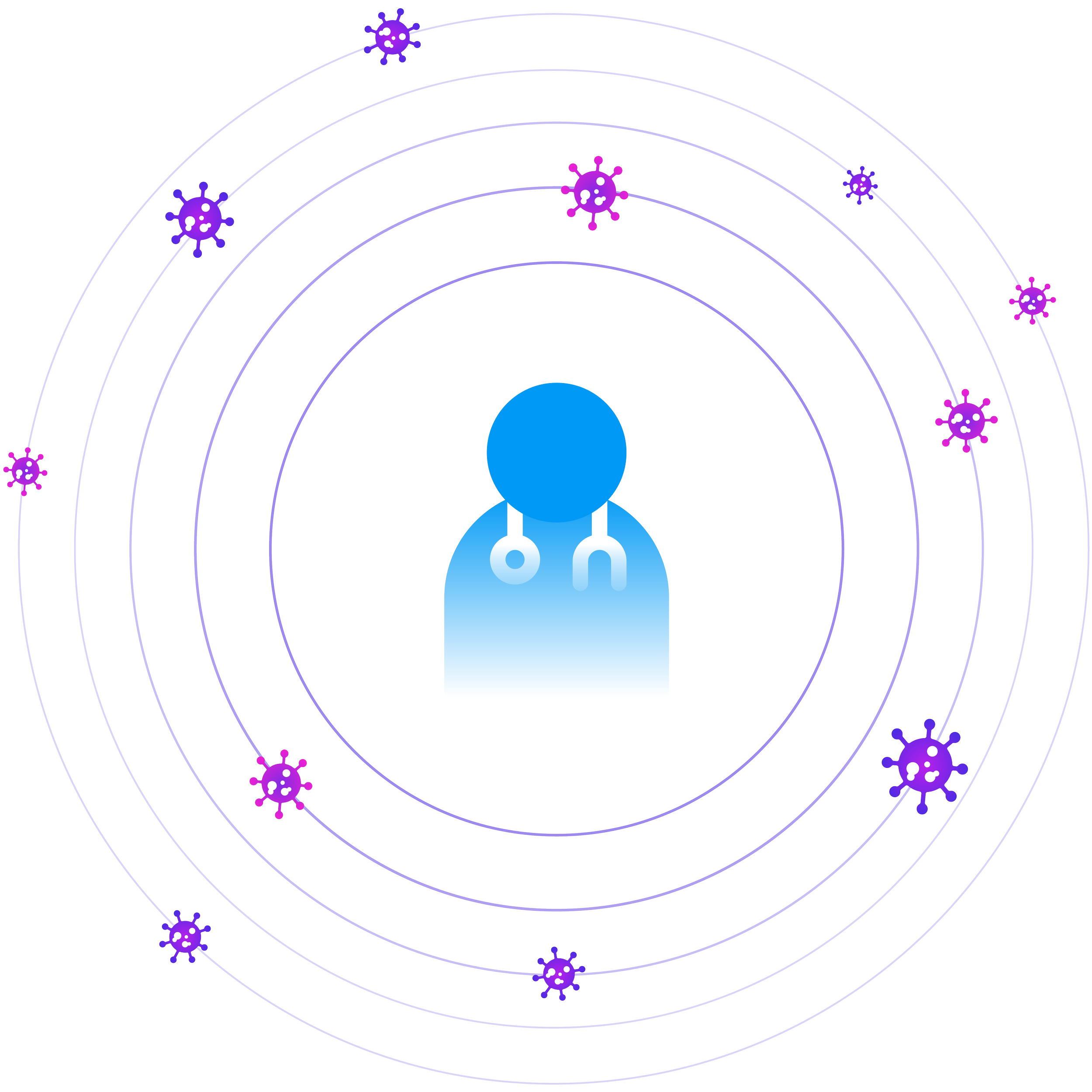
Continuously analyze inbound communications to flag early signals of infectious disease. Using advanced machine learning, the system escalates risk language and routes messages for timely review—without disrupting clinical workflows.
- Scans messages, calls, and transcripts in real time
- Escalates early indicators of infectious diseases
- Routes messages to the clinical team for fast intervention
- Continuously adapts to evolving threats and criteria
AI-Powered Disease Escalation
Utilize a purpose-built NLP model created by physicians and epidemiologists to escalate language patterns tied to infectious disease risk across patient communications.
- Built specifically for clinical and public health use cases
- Trained and validated by practicing clinicians and public health experts
- Continuously updates based on new threat criteria and symptom language
- Analyzes real-time inputs across patient portals, phone calls, voicemails, texts, & chat
Urgent Routing for Faster Intervention
Once a potential infectious disease case is identified, route the flagged communication to the appropriate team, specialty provider, or public health coordinator. Escalation is context-aware and driven by clinical rules, ensuring timely action without manual triage.
- Routes flagged cases directly to the right clinical or operational team
- Supports proactive intervention to minimize risk of spread
- Can adapt escalation pathways by site, team, or threat type
- Built to integrate into existing EMR and command center workflows
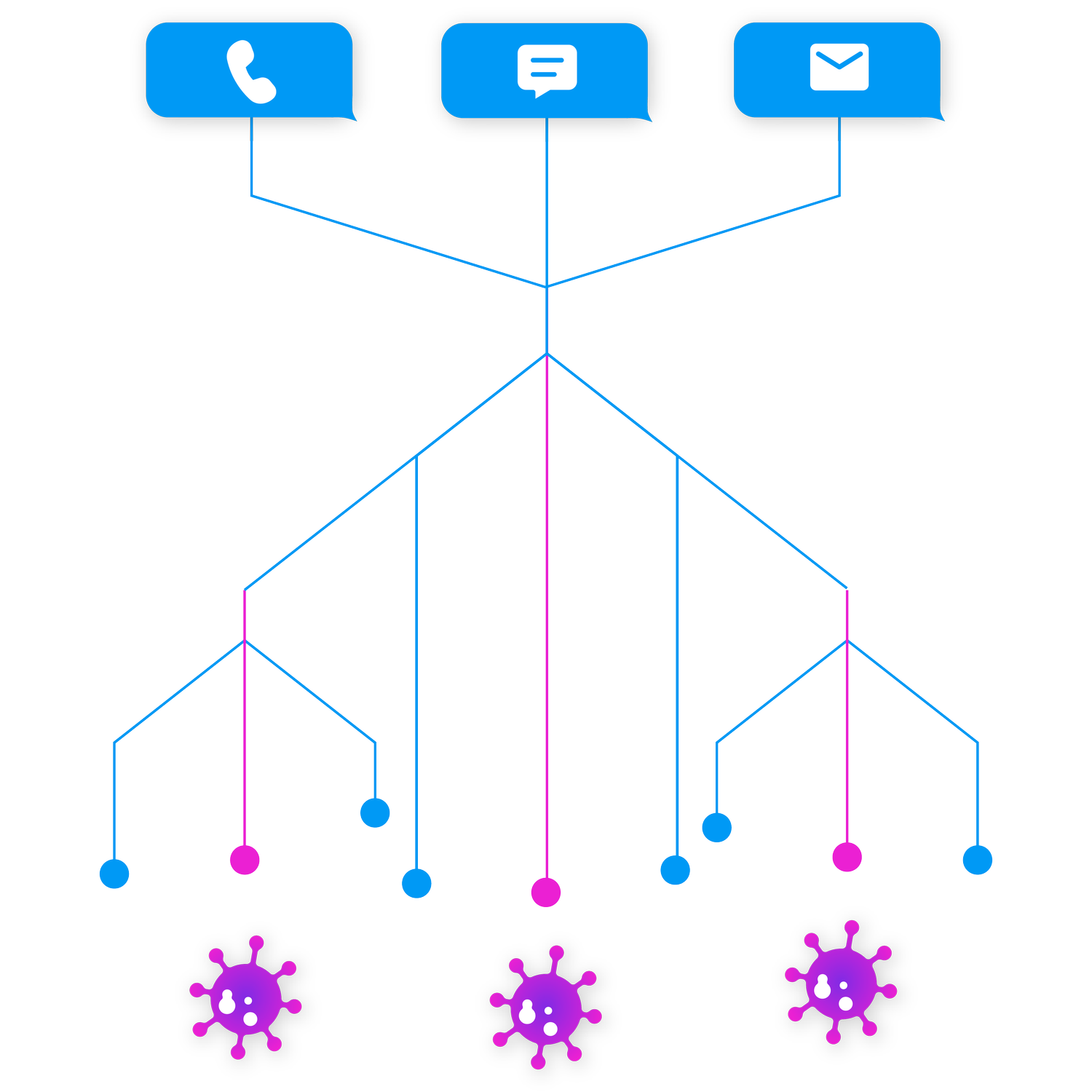
Multimodal Input Analysis
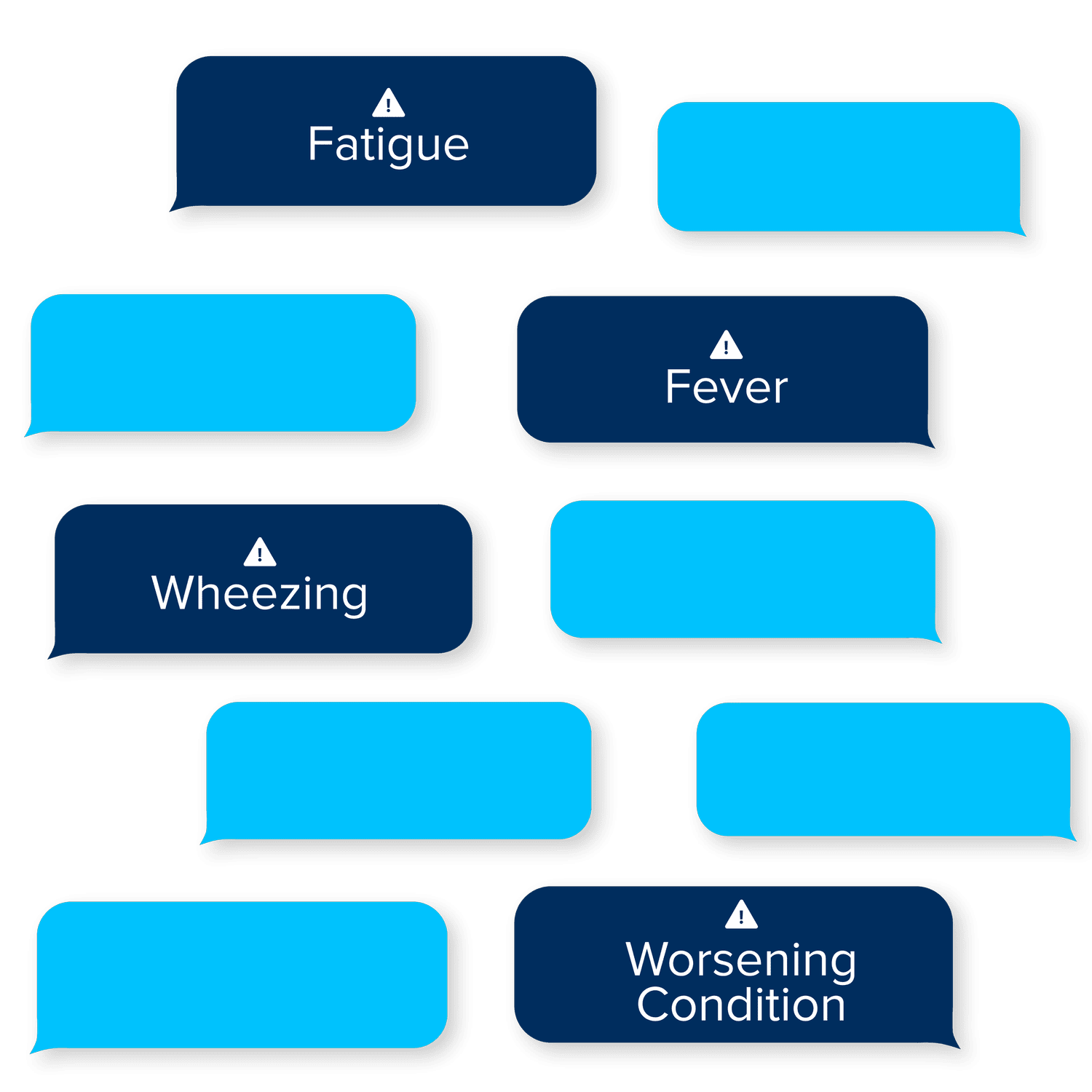
Process inputs from across communication channels to ensure nothing slips through the cracks, regardless of where or how the message arrives.
- Ingests and analyzes data across voice, text, fax, email, chat
- Recognizes risk signals even in free-text or incomplete documentation
- Supports multi-language communication analysis
- Connects to existing intake, triage, and transcription systems
Population Health Insights
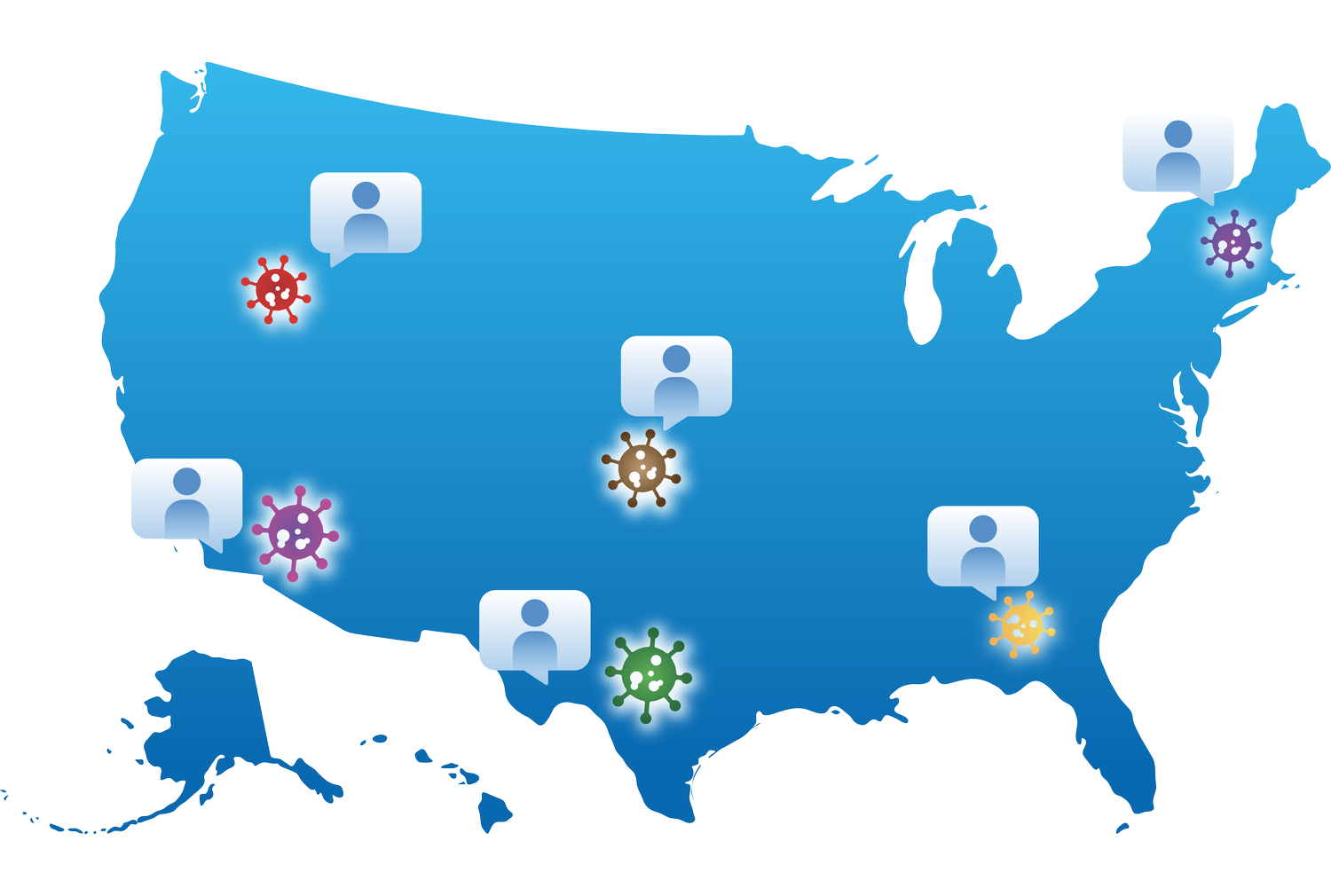
Aggregate signals across an organization to support public health readiness. By identifying geographic clusters, disease trends, and high-risk demographics, give health organizations and public agencies a head start on coordinated response.
- Displays emerging trends in disease reports across locations
- Provides dynamic dashboards for real-time threat monitoring
- Enables systemwide insight without disrupting clinical workflows
- Built for collaboration with public health partners and agencies

Case Study
Enhancing COVID-19 Diagnosis Through Escalation
73K
Total patient messagesanalyzed
+625
Positive COVID-19 classifications
+35
New clinical trial participants

Expert Perspectives: Bringing AI to the Front Lines of Care
In this interview video, we sat down with two experts—Dr. Larry Anderson, Professor at Emory University School of Medicine and former Epidemic Intelligence Service Officer at the CDC, and Dr. Yuanda Zhu, Data Scientist & Director of Engineering at Switchboard, MD—to discuss the challenges of infectious disease management and how AI technology can help.
“Having a flexible and well-integrated system in place is essential for managing emerging health threats,
In the case of new outbreaks, symptoms and data points can evolve rapidly, and being able to adapt and analyze those changes quickly is critical to making informed decisions and supporting effective responses."


Larry J. Anderson, MD
Professor at Emory University School of Medicine,
Former Director of CDC's Division of Viral Diseases in the National Center for Immunization and Respiratory Diseases